Driving simulator training helps new drivers practice real-world decision-making in a controlled, low-risk environment before they face those situations on actual roads. For teen drivers, nervous beginners, and G1 or G2 students, virtual driving can be the bridge between knowing the rules and reacting safely when the road gets complicated.
That matters because driving is still one of the highest-risk skills young people learn. Transport Canada reported 1,964 motor vehicle fatalities and 9,261 serious injuries across Canada in 2023, with fatalities reaching their highest count in the past 10 years. Ontario’s current road safety highlights also list 623 road fatalities and 1,703 serious injuries, which is a clear reminder that better driver training is not optional. It is necessary.
What Is Driving Simulator Training?
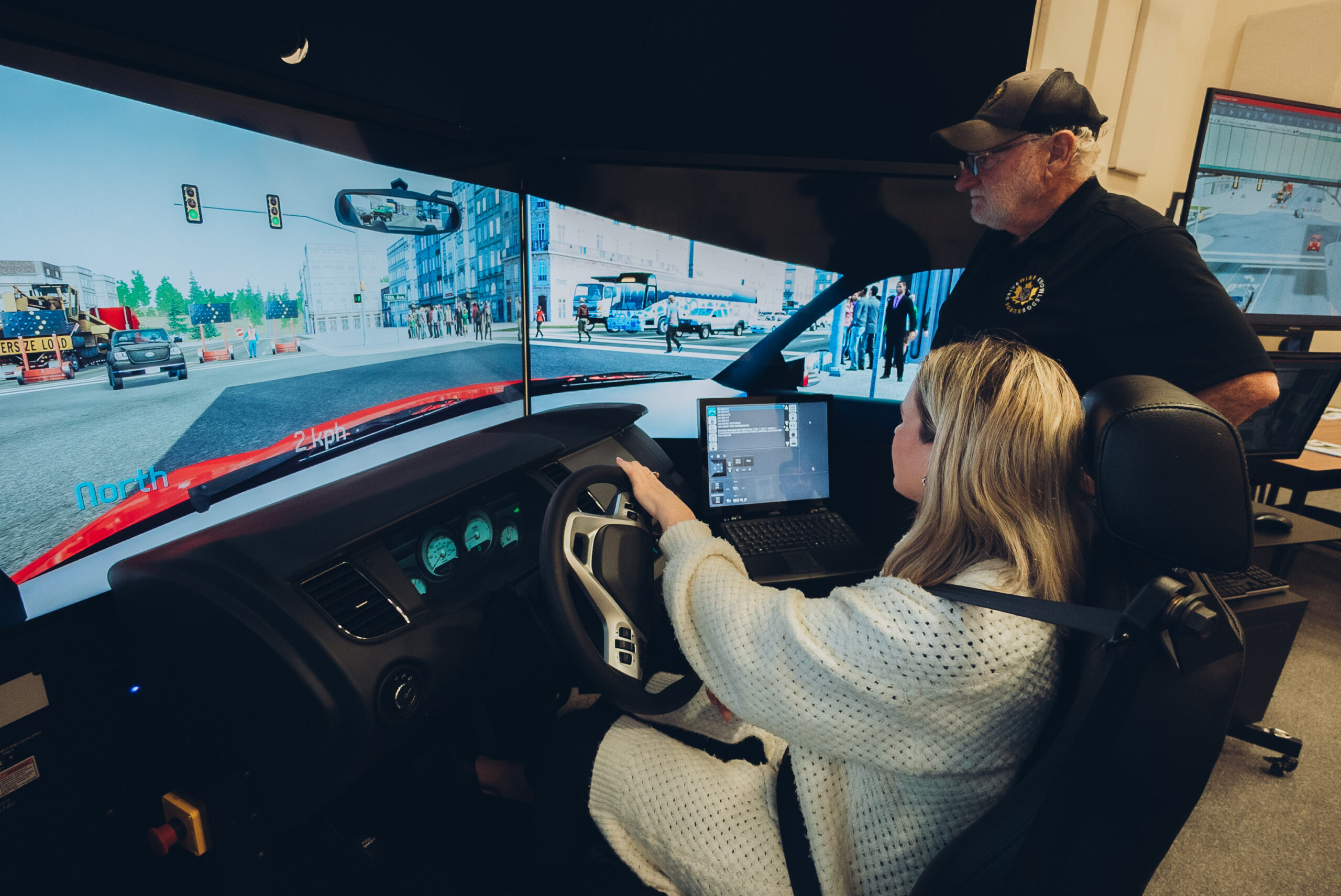
Driving simulator training uses a realistic virtual driving environment to help students practice core driving skills before getting into live traffic.
At DriveWise, simulation is part of a blended approach that includes classroom learning, in-car instruction, and hands-on practice. Students can experience realistic road conditions, hazards, weather, traffic, pedestrians, cyclists, and emergencies in a safe learning space.
Virtual Driving Helps Students Practice Without Real-World Consequences
The biggest advantage of virtual driving is simple: students can make mistakes, learn from them, and try again without putting themselves or others at risk.
A simulator can recreate situations that are hard, risky, or impossible to schedule during a normal lesson. Think heavy snow, fog, night driving, sudden pedestrians, poor traction, aggressive drivers, highway merging, brake failure, or hidden hazards.
That kind of repetition builds pattern recognition. New drivers do not just need to know what a hazard is. They need to spot it early enough to do something about it.
Why Teen Drivers Need More Than Basic Road Practice
Teen drivers are not risky because they are bad people. They are risky because they are inexperienced.
TIRF notes that young drivers aged 16 to 24 have the highest crash risk of all age groups as they learn to drive. A major skill gap is hazard perception, including the ability to recognize risks and anticipate how to avoid them.
That is where driving simulator training becomes valuable. It lets students practice the mental side of driving: scanning, predicting, reacting, and recovering.
Hazard Perception Is a Skill, Not a Personality Trait
Some students are naturally cautious. That does not mean they are safe.
A cautious driver can still freeze at a four-way stop, miss a cyclist in a blind spot, brake too late in bad weather, or panic during a highway merge. Simulator training gives instructors a way to test how students think under pressure.
Instead of hoping the student eventually sees enough scenarios on the road, simulators can place them directly into teachable situations.
What Does Driving Simulator Training Help Students Build?
1. Better Defensive Driving Habits
Defensive driving is not about driving slowly. It is about seeing problems before they become emergencies.
In a simulator, students can practice space management, lane positioning, following distance, mirror checks, and safe reactions to unpredictable drivers.
2. Stronger Decision-Making Under Pressure
A road test assesses whether a student can operate a vehicle safely within a limited time window. Real life asks for more.
Students need to know what to do when a pedestrian steps out suddenly, a driver cuts them off, road conditions change, or traffic does not behave politely. Simulator training lets them rehearse those decisions before the stakes are real.
3. Safer Responses to Weather and Low Visibility
Canadian drivers need more than sunny-day skills.
DriveWise simulators can expose students to conditions such as heavy snowfall, fog, slippery roads, high winds, daytime driving, and night driving. This matters because many new drivers do not get enough guided experience in difficult conditions before they are driving independently.
4. Better Awareness Around Distraction
Distraction is not just texting. It can be music, passengers, navigation, anxiety, visual clutter, or the student’s own overthinking.
That is the kind of skill students need early: eyes up, attention forward, brain engaged.
The Honest Truth: Simulators Do Not Replace Road Training
Here is where some marketing gets lazy.
Driving simulator training is powerful, but it should not replace in-car instruction. A 2024 systematic review in the Journal of Safety Research found that simulator training can improve simulated driving skills, including lane maintenance, speed regulation, and response to stimuli. However, the evidence remains unclear as to whether it improves on-road safety over time. The review concluded that simulator training can supplement classroom and on-road training, not replace it.
That is the right way to use it.
The goal is not “virtual driving instead of real driving.” The goal is to prepare students better before they enter real traffic.
How Simulator Training Fits Ontario’s Graduated Licensing System
Ontario’s graduated licensing system is designed to help new drivers build experience over time through the G1, G2, and full G stages. DriveTest explains that many new drivers take a government-approved Beginner Driver Education course and may be eligible to take the G2 road test after 8 months instead of the usual 12 months.
That waiting period matters. It gives students time to practice. But practice only works if it is intentional.
A strong driver training program should combine:
1. Classroom Learning
Students need to understand rules, signs, right-of-way, risk, and responsibility.
2. In-Car Lessons
Students need real road experience with a qualified instructor.
3. Driving Simulator Training
Students need guided practice in difficult situations before they face them on their own.
That combination is where students build confidence without skipping the hard parts.
What Should Parents Look For in a Driving School?
If you are choosing a driving school for a teen driver, do not stop at price.
Ask better questions.
Does the Program Teach Decision-Making?
Passing the test is not the same as becoming a safe driver.
Does It Include Realistic Hazard Practice?
New drivers need exposure to more than quiet residential streets.
Does It Support Nervous Drivers?
A good instructor should build confidence without rushing the student.
Does It Use Simulation as Part of a Complete Program?
Simulator training is most effective when it supports classroom and in-car learning.
Why Driving Simulator Training Gives New Drivers an Advantage
The secret weapon is not the technology by itself. It is the way the technology creates repetition, reflection, and coaching.
Students can pause, replay, review, and learn from what happened. Instructors can show the consequences of a missed shoulder check, poor following distance, or late braking in a way that sticks.
That is the real value of driving simulator training. It turns “be careful” into something students can actually practice.
If you want a driving school that takes safety seriously, DriveWise should be your driving school of choice. With a blended approach that combines interactive classroom learning, in-car instruction, and driving simulator training, DriveWise helps new drivers build the confidence, awareness, and decision-making skills they need for real roads, real conditions, and a lifetime of safer driving.