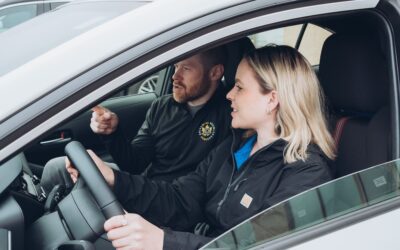
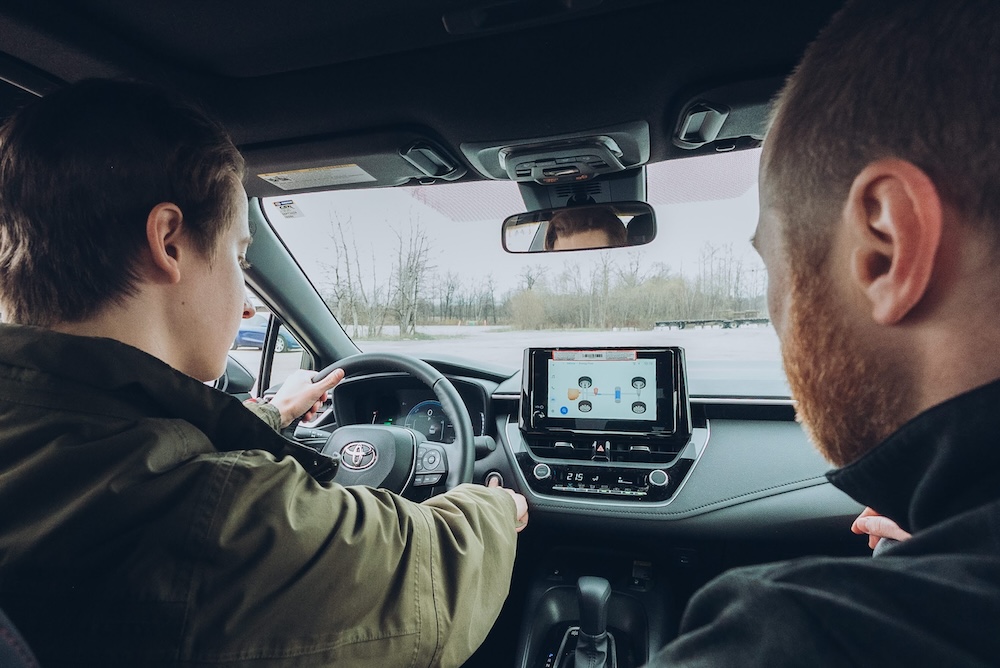
Your teen’s first driving lesson is a major step toward independence, but learning to drive safely takes much more than getting comfortable behind the wheel. For beginner drivers, the habits developed during the first few months can influence how they approach speed, distractions, decision-making and road safety for years to come.
Parents have an important role in that process. The goal is not to become a second driving instructor. It is to reinforce professional instruction, create opportunities to practise and model the same safe driving habits you expect your teen to follow.
Here is what parents should know before that first lesson and how to support new driver safety as their teen gains experience.
What Happens During a Teen’s First Driving Lesson?
A first driving lesson is usually about building a foundation rather than tackling complicated traffic situations immediately.
Depending on the student’s existing experience, an instructor may begin by reviewing vehicle controls, seating position, mirrors, steering, braking, acceleration, observation and basic vehicle positioning. From there, lessons can gradually introduce intersections, lane changes, parking, traffic situations and defensive driving skills.
In Ontario, a government-approved Beginner Driver Education program must include at least 20 hours of classroom or digital instruction, 10 hours of in-vehicle instruction and 10 hours of flexible instruction.
That structure matters because learning to drive is not about mastering one road test route. It is about developing the judgment and habits needed to handle changing road conditions safely.
How Parents Can Prepare Their Teen Before the First Driving Lesson
Review the Basics Without Trying to Teach Everything
Before the lesson, make sure your teen understands basic vehicle terminology such as the accelerator, brake, mirrors, turn signals and parking brake.
Avoid overwhelming them with a long list of instructions or trying to teach advanced manoeuvres before they meet their instructor. Conflicting instructions from a parent and professional instructor can make learning more difficult.
Instead, encourage your teen to ask questions and pay attention to the techniques their instructor wants them to practise.
Make Sure They Understand Their G1 Responsibilities
Ontario’s graduated licensing system is designed to let beginner drivers gain experience gradually in lower-risk driving situations.
A G1 driver must maintain a zero blood alcohol level, be accompanied by a qualified driver, avoid driving between midnight and 5 a.m. and follow restrictions concerning 400-series highways and certain high-speed expressways. The accompanying driver must hold a valid Class G or higher licence and have at least four years of driving experience.
Parents should understand these rules too. When you supervise practice driving, you are part of the safety system.
Set the Expectation That Learning Takes Time
A nervous first lesson does not mean your teen will be a poor driver. Likewise, a confident first lesson does not mean they are ready for every situation.
Ontario’s graduated licensing process intentionally gives new drivers time to build experience before receiving full driving privileges. Completing an approved Beginner Driver Education course can also reduce the G1 waiting period before the first road test from 12 months to eight months.
The focus should be steady improvement, not racing toward the road test.
How Parents Can Support New Driver Safety Between Lessons
Practise the Skill the Instructor Just Taught
One of the best ways to help is to reinforce professional instruction between lessons.
If your teen worked on smooth braking, turns or observation during their lesson, practise those same skills during your next supervised drive. Avoid jumping ahead to complex highways, downtown traffic or difficult weather simply because your teen wants more excitement.
Build difficulty gradually.
Start with quiet streets and familiar routes. As skills improve, introduce busier intersections, different speeds, parking lots, nighttime driving and changing weather conditions when permitted and appropriate.
Give Clear, Calm Instructions
Saying, “Watch out!” tells a beginner driver that something is wrong but does not tell them what action to take.
Use specific instructions instead:
“Ease off the accelerator.”
“Check your right mirror.”
“Leave more space behind that vehicle.”
“Start braking earlier.”
Give instructions early enough that your teen has time to process them.
After the drive, discuss one or two things they did well and one or two skills to practise next. Turning every drive into a long critique can make a beginner driver more tense and less receptive to feedback.
Your Teen Is Learning From How You Drive Too
This is where parents sometimes undermine their own advice.
You can tell your teenager not to speed, use their phone or roll through stop signs, but if they regularly watch you do those things, your behaviour becomes the stronger lesson.
CAA specifically encourages parents not to pass their own poor driving habits to young drivers and emphasizes the importance of discussing safe driving responsibilities as a family.
Parental influence continues even after teens begin learning independently. CAA recommends making safety the priority, following road rules, avoiding distractions and having clear family expectations around driving.
If you want a safer teen driver, the standards need to apply to everyone using the family vehicle.
Make Distracted Driving a Non-Negotiable Rule
Phones should be dealt with before the vehicle moves.
Transport Canada identifies texting, phone use, conversations, eating and interacting with navigation or entertainment systems as potential sources of driver distraction. Its National Collision Database found that distracted driving contributed to an estimated 22.5% of fatal collisions and 25.5% of serious-injury collisions in 2021.
For a beginner who is still learning how to monitor traffic, control the vehicle and anticipate hazards simultaneously, removing unnecessary distractions should become automatic.
Parents can help by creating simple family rules:
- Set navigation before driving.
- Keep phones out of reach.
- Let passengers manage music or directions.
- Pull over safely before dealing with something that requires attention.
Create a Parent-Teen Driving Agreement
Driving privileges come with responsibilities.
CAA’s DriveRight resources recommend conversations between parents and teens about expectations and even suggest using a parent-teen driving agreement.
Your agreement can cover issues such as vehicle access, passengers, speeding, phones, impaired driving, curfews, fuel and what happens when rules are broken.
It should also include a safety promise from the parent. If your teen is ever in a situation where they do not feel safe driving or riding with someone else, they should know they can call you for a ride.
CAA similarly recommends establishing a plan that gives young drivers access to a safe ride home when they do not feel safe driving.
Professional Training and Parent Practice Work Best Together
Parents provide something a driving instructor cannot: regular practice over time. Professional instructors provide something parents may not: structured training, current techniques and experience teaching beginner drivers.
The strongest approach combines both.
Let the instructor introduce and correct driving techniques, then use supervised family driving time to reinforce those skills. Keep communication open with your teen, increase driving difficulty gradually and make new driver safety more important than simply passing the next test.
For families looking for professional teen driving lessons and Ontario Beginner Driver Education, choose DriveWise as your driving school of choice. With locations serving Barrie, Oakville, Burlington and Orangeville, DriveWise helps beginner drivers build the skills, awareness and confidence needed to become safer drivers from their first driving lesson forward.